
The Name Issue
Controversies on the Macedonian name
In 1991, a tiny landlocked country declared itself independent from Yugoslavia and went ahead to claim the name the Socialist Republic of Macedonia. It was created by Marshall Tito and by 1994, it would become a sovereign state as the Republic of Macedonia, thereby laying claim to the rich cultural history of the Hellenic culture. The move was a controversial one in Greece and several other parts of the world, and it led to a bilateral naming dispute with Greece which is still very much in play till today.
For obvious reasons, Greece rejected the adoption of the name “Republic of Macedonia”, the major reason for this was the fact that Macedonia is actually a region in northern Greece and the decision of another country to use the name failed to differentiate the new state from the geographical parts of Greece where that actually applies. The region of Macedonia in Greece is a place with over 2.5 million. Efforts to resolve this dispute immediately commenced and on September 13, 1995, both states signed an interim accord where they agreed to reference the sovereign state as the “the former Yugoslav Republic of Macedonia ” (FYROM) until they can finally resolve the naming dispute. Greece made significant efforts to end the dispute by even offering the compromise that a compound name that has a geographic qualifier should be adopted to differentiate FYROM from the Macedonia region in Greece.
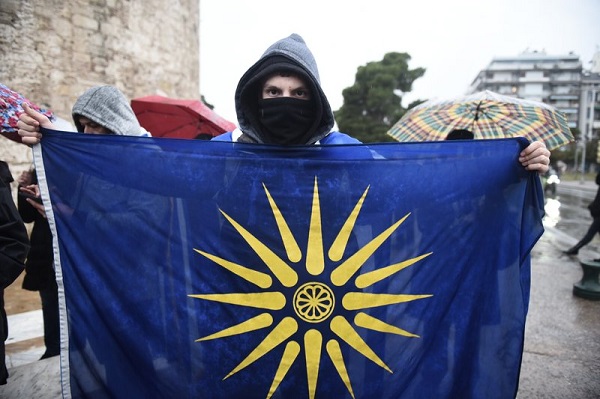
The demand of the FYROM to claim the Macedonian name is a threat to Greece in two ways. First, it threatens the cultural history of the Greek people and also the territorial limits of the too. Many of the native Greeks, millions, who live in the north of the country regard themselves as Macedonians. The appropriation of that name by a former Yugoslav state thereby undermined their cultural identity and to make matters more complicated; the FYROM also started campaigning to claim elements of the Hellenic identity and culture.
This is best seen in the nationalist party VMRO-DPMNE which after attaining power in 2006 started pushing to fabricate a connection between ancient Hellenism and the former Yugoslavia state. It started with renaming the main airport in Skopje as “Alexander the Great Airport” and launching the “Skopje 2014″ project which spent millions of building statues of Hellenic heroes in different parts of the country.
Apart from this, another group in the country is pursuing a united Macedonia which would include northern Green as well as areas in Bulgaria, Serbia, and Albania. The group even published a map here the FYROM territory was extended to Greece. It is all these factors that has led Greece to request the FYROM should adopt a compound name that has geographic qualifier for use on the international stage switch qualifier such as Northern, Upper, or New. Not much has been achieved in deliberations.